
 (623) 236-2097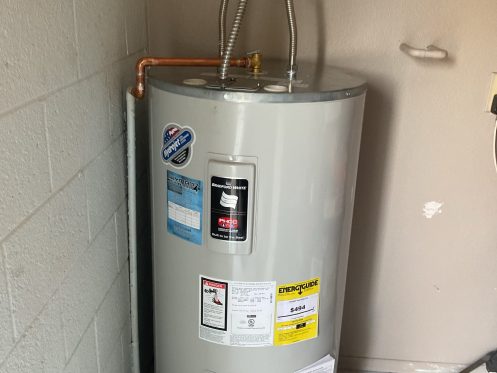
Choosing between a tank water heater and a tankless water heater looks like a simple either-or scenario, but the final decision depends on your household, fuel supply, budget, and the one factor that outweighs the rest — Phoenix’s hard water.
At Wyman Plumbing & Mechanical, we set out to offer a family-owned alternative to the sales-over-service model so many Phoenix plumbers run to chase volume for their investors. Our ‘No-Fear Education’ model is the Wyman Standard. It gives you a diagnosis, not a sales script. So here’s our guide to help you decide which water heater is best for your home.
Tank vs. Tankless Water Heaters: What’s the Difference?
The difference between a tank water heater and a tankless water heater is that the tank keeps water heated in the tank (or reservoir), while a tankless heater does not. Instead, it only heats water on demand as you use it.
The tank’s design is simple, but the reservoir is finite, and a long shower or multiple appliances using water simultaneously can empty it, leaving you with no hot water until it fills and heats all the new water in the tank.
Tankless heaters were built to solve exactly that time delay and reduce the excess energy a tank uses to keep its reservoir warm around the clock.
Neither system is automatically better. The best water heater matches how your household actually uses hot water.
How Phoenix’s Climate and Water Conditions Can Influence Your Decision
According to The City of Phoenix Water Quality Report, local hardness sits at 10 to 17.6 grains per gallon, well into the very hard range. That means the water is heavy with calcium and magnesium, and heating drives those minerals onto the nearest hot surface. In a tank they settle as sediment on the floor. In a tankless heater they form scale in the heat exchanger.
Tank Water Heaters: How They Work, Pros, and Considerations
A tank water heater stores and constantly heats between 40 and 80 gallons so hot water is ready when you need it, at least until the tank runs low.
- Pros: Benefits include lower upfront and installation cost. In a power outage, gas models can keep producing hot water when a tankless unit can’t.
- Considerations: A tank burns energy around the clock keeping the stored water hot, whether or not anyone uses it, and it can still turn cold when several people use it at once. In Phoenix, sediment from the hard water causes longer run times and higher bills, and bakes onto the tank floor until the steel overheats and weakens.
Tankless Water Heaters: How They Work, Pros, and Considerations
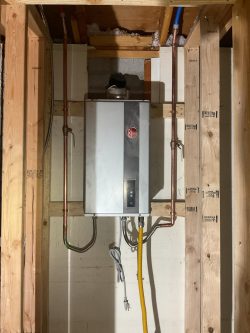
A tankless heater stores nothing, heating water only when you need it.
- Pros: Tankless benefits include unlimited hot water (with correct sizing), lower electricity bills, and a lifespan of up to 20 years, roughly double that of a tank. They’re also significantly smaller, taking up much less room than a traditional tank.
- Considerations: A tankless unit can only heat so many gallons a minute so sizing matters. If it’s too small for your household, running several taps at once, like two showers and the dishwasher, can draw hot water faster than the unit can heat it. Another factor is the hard-water scale. If it’s not cleared regularly, you can be left without any hot water at all.
Can You Switch from a Tank Water Heater to a Tankless System?
Yes, you can switch from a tank to a tankless system, but it’s not a straight swap. You’ll most likely need new venting, a larger gas line, and in some cases, a panel upgrade.
Switching from tank to tankless costs more than a straight tank swap because of the additional work involved. Our plumbing experts can help you weigh your options.
Gas vs. Electric Water Heaters: How Fuel Type Affects Your Options
Fuel type sets cost, capacity, and whether a unit is even installable in your home.
Gas tank water heaters
These are common in the Valley. They provide fast reheating, they’re less expensive to run, and, if they have a standing pilot, they can keep producing hot water during power outages. One thing to note is that gas water heaters need proper venting.
Electric tank water heaters
Electric tank heaters are an obvious choice for homes without existing gas lines. While they’re cheaper to buy, they take longer to reheat, and they’re generally pricier to run in most of the Valley.
Gas tankless water heaters
Gas tankless water heaters are the type we install most often. They heat enough water per minute to run several fixtures at once, and they’re more energy efficient. These heaters need venting and sometimes a larger gas line.
Electric tankless water heaters
Electric tankless heaters are great for small homes, additions, or a single far-off fixture like a garage sink or a distant bathroom. However, sizing matters. A licensed plumber can help you determine the correct size for your home.
What Does a Tank vs. Tankless Water Heater Cost?
When considering a new water heater, you should take into consideration the purchase cost, the installation cost, and the long-term operating costs of each type.
- Purchase costs: A tank water heater costs less to buy than a tankless water heater.
- Installation costs: Tank installation is relatively cheap when replacing an existing tank. Tankless heater installation is more costly because of the additional work required for venting, gas-line sizing, and mounting.
- Energy efficiency and long-term operating costs: A tankless water heater is the more efficient unit, and saves a typical Phoenix home around a hundred dollars a year.
How Long Does Each Type of Water Heater Last?
A tank water heater lasts about ten years with maintenance, six to eight without. A tankless water heater reaches about twenty with annual descaling.
Knowing the signs that your water heater needs replacing, like water leaking from the tank, popping or rumbling sounds, or cloudy, rusty water, can protect you from full system failure and allows you to plan ahead.
Water Heater Maintenance: Tank vs. Tankless
Water heater maintenance is universally important in Phoenix, more so than in soft-water cities. We recommend a yearly water heater inspection to catch scale, sediment, and wear before they turn into a failed unit and a cold shower.
Tank water heater maintenance
Tanks in the Valley need annual flushing to clear the sediment layer. You should also schedule anode rod checks every two to three years, and a water heater thermostat test to make sure it’s maintaining the right temperature.
Tankless water heater maintenance
You should plan to keep your heat exchange clear with scheduled annual descaling. It costs a bit more than a tank flush, but it protects the warranty, and will help the unit run for its full service life.
Which Water Heater Is Best for Different Types of Households?
The right choice of water heater depends on how your home draws hot water. For most households tankless systems are the better option. A large family running several bathrooms at once needs the muscle of a well-sized gas tankless unit or a large tank. Retirees staying put gain most from the long service life of a tankless, and a vacation rental wastes nothing while it sits idle between guests.
How to choose the best water heater for your Phoenix home
If you have a smaller budget or want a simpler system to maintain, a tank water heater may be the best option. If you’re planning on staying in your home long-term, or want to stop running out of hot water, consider a tankless water heater.
Questions to Ask Before Choosing a New Water Heater
Quick answers to a few key questions narrow the field for you, and help our team shape the best possible options for your situation.
- How many people live in the home, and how many bathrooms run at peak?
- How much hot water does a heavy morning use?
- Will the install need upgrades?
- What’s your budget, upfront and across 10 to 20 years?
Should You Repair or Replace Your Existing Water Heater?
This is one of the questions we’re most frequently asked, and the answer depends on a few factors:
- Age: A tank nearing its end-of-life is a strong candidate for replacement, especially if it hasn’t been well maintained.
- Rising hot-water costs: If your energy bill is climbing it may mean your heater is losing efficiency, and a repair may not be enough to rectify the problem.
- Repair cost against replacement: Once a repair reaches half the price of a new unit, replacing is the smarter money.
- Whether it still meets your needs: If you’re planning showers around each other or waiting on the water to heat, your unit no longer fits your household, and replacing and upgrading is likely the better choice.
Talk with the Water Heater Experts at Wyman Plumbing & Mechanical
Unlike many investor-owned Phoenix plumbers, Wyman Plumbing & Mechanical is owned and run by the people doing the work.
Since co-founding the company in 2016, Doug Wyman, a master plumber for over twenty years, licensed across Arizona, Texas, California, and Colorado, and his wife Tamra have laid out inspection-based Good, Better, Best options for every customer. That’s the Wyman Standard, and it’s what our customers most appreciate.
Contact us today for your next water heater inspection, repair or replacement. We’ll be happy to walk you through your options.