 (623) 236-2097
Worried that sewer repair means tearing up your yard? Repairing your sewer line no longer automatically requires digging up your property. Trenchless repair methods like CIPP pipe lining and pipe bursting can fix or replace a damaged line without excavation, as long as your pipe is in the right condition. Understanding how trenchless and traditional sewer repair differ, when each applies, and how timing affects your decision can help you make the right call for your home.
Sewer Line Problems Don’t Always Mean Digging Up Your Yard
When you’re dealing with early-stage repairs like roots working into a joint, a small crack on an old clay pipe, or minor corrosion on a cast iron line, there’s often no need to excavate. At this stage, the pipe is usually still intact enough to rehabilitate from the inside, without any trenching.
Waiting too long can limit your options. As the damage progresses and the pipe shifts, sags, or collapses, you can lose the opportunity to repair it trenchlessly. The condition of your pipe on inspection day decides which repair method is possible, which is why the method that fits your home depends on what a camera inspection reveals.
Traditional vs. Trenchless Sewer Repair: What’s the Difference?
Traditional and trenchless pipe repairs differ in how they access your pipe and how much of your property they disturb.
Traditional sewer repair & replacement
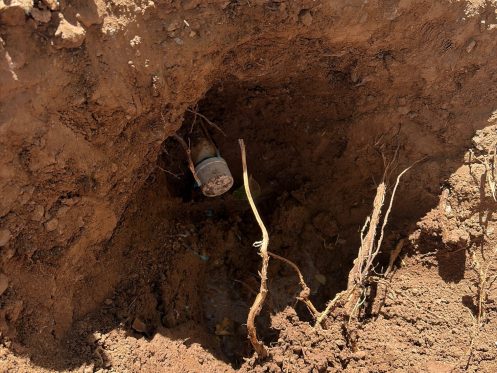
Traditional sewer repairs and replacements involve excavation. A crew digs into the damaged section or along the full run of the pipe, removes it, installs new pipe, and backfills the trench. It’s the most disruptive method, removing your landscaping, concrete, and sometimes flooring, but it can be the only option when the pipe is too damaged.
Trenchless sewer repair
Trenchless sewer repairs rehabilitate or replace pipes through small access points, like a cleanout or small pit at each end of the run. CIPP lining creates a new pipe inside the old one, while pipe bursting pulls a new pipe through and breaks the old one apart. Neither method requires trenching, keeping your yard, driveway, and floors intact.
Why Trenchless Repair Can Be the Better Option When Your Pipe Qualifies
When your pipe only has minor damage, trenchless repairs are a faster, less invasive solution than excavation. You won’t have to replace your yard or tear up your driveway, and the work can usually be completed in a day or two. The finished pipe that runs inside or replaces the original is also seamless, making it resistant to root intrusion and corrosion.
CIPP Pipe Lining: Repairing Your Sewer Line from the Inside Out
Cured-in-place sewer pipe lining repairs your sewer line without removing it. A flexible, resin-covered liner is inserted into the existing sewer pipe, inflated against the pipe walls, and cured with heat, steam, or UV light until it hardens. You get a new, structurally sound pipe running inside the original, without joints for roots or water to work into.
When Is Pipe Lining a Good Fit — and When Is It Not?
CIPP may be a good option when:
- The pipe has cracks, root intrusion, corrosion, or leaking joints but is still structurally intact.
- The line holds its original shape and alignment along the full run.
- You can access the pipe through a cleanout or a single small excavation.
- You want to protect mature landscaping, concrete, or interior finishes.
CIPP may not be appropriate when:
- Sections of the pipe have collapsed or are badly deformed.
- There are significant bellies or offsets.
- Joints have separated, so the liner has nothing to bond against.
- The line is too small and needs to be upgraded to a larger diameter.
What Happens If Your Sewer Line Is Too Damaged for CIPP?
If your sewer pipe is too damaged for CIPP, you still have trenchless options. Pipe bursting is the trenchless sewer line replacement method that’s designed for pipes that need to be replaced completely rather than repaired in place.
Pipe Bursting vs. CIPP: What’s the Difference?
CIPP repairs an existing pipe, while pipe bursting replaces a sewer line without digging trenches. During a pipe bursting job, a bursting head is pulled through the old line with a new pipe attached behind it. The head breaks up the old pipe outward into the surrounding soil, and the new pipe takes its place. It only requires two access points at each end of the run and can be used for pipes that are too deteriorated to line.
When Traditional Sewer Repair or Replacement Is the Better Choice
If your pipe has deteriorated past the point of lining or bursting, excavation can become the only option. Traditional sewer line repair or replacement makes sense when:
- The pipe has fully collapsed, and there’s no path for a liner or bursting head.
- Severe bellies, misalignment, or grade problems need correction.
- The line can’t be reached with trenchless equipment.
- Only a small section is damaged, and it’s in an open, easy-to-restore area.
Don’t Wait Until a Small Sewer Problem Becomes a Bigger One
Waiting too long to handle a sewer problem can shrink your repair options and increase the total cost. A clogged sewer line or minor cracking can often be fixed with CIPP today. If you leave it for a few more years, it can shift, separate, and belly to the point where lining is no longer possible and excavation may be the only option.
If you have recurring backups, slow drains throughout your house, gurgling fixtures, or sewer odors wafting around your space, don’t ignore them. Scheduling a sewer camera inspection at the first sign of trouble can catch damage while it’s still repairable and allows you to choose from the full range of methods.
Does Phoenix’s Desert Environment Make Sewer Pipe Corrosion Worse?
Living in the desert can speed up sewer line corrosion. Valley soils are highly alkaline and often contain caliche, which eats away at cast iron pipes. Phoenix’s hard water also leaves mineral scale that traps moisture and waste against the pipe walls, while high temperatures speed up the chemical reactions that make sewer gases corrosive.
How a Sewer Camera Inspection Determines Your Best Option
A professional sewer camera inspection is the best way to determine which repair method fits your pipe. A high-resolution camera is inserted through the line and records its condition to locate cracks, roots, corrosion, offsets, bellies, and any collapse. The footage gets sent to an above-ground monitor, where technicians can review it in real time and identify the depth and location of each problem.
Understanding the type, location, and severity of problems shows whether the pipe can host a liner, needs to be burst and replaced, or if traditional excavation is the only option. You can see exactly what’s going on inside your pipe and make a decision based on the findings.
What Does Trenchless vs. Traditional Sewer Repair Cost?
Several factors affect the cost of sewer pipe repair. While the upfront cost of trenchless technology can be higher than PVC pipe, the ‘total project cost’ is often significantly lower because you aren’t paying thousands to replace your driveway, pavers, or mature desert landscaping.
Trenchless costs can depend on:
- The length and diameter of the line.
- Pipe condition and how much cleaning is required before lining.
- Whether it’s a CIPP or pipe bursting job.
- Accessibility and whether an existing cleanout is usable.
- The depth and nearby utilities we need to work around.
Traditional repair costs can include:
- Excavation labor and equipment.
- Removal and disposal of the old pipe.
- The new pipe and installation labor.
- Restoration of everything that was removed, such as concrete, landscaping, and irrigation.
How Much of Your Property Will Need to Be Disturbed?
The repair method determines how much of your yard, landscaping, driveway, and flooring is disturbed. Traditional excavation requires an open trench, while trenchless options usually just need one or two small access points.
Traditional excavation
Excavation requires an open trench along the full length of the repair, typically several feet wide and deep enough to reach the pipe. Anything above that trench needs to be removed, including grass, pavers, concrete, and irrigation lines. In slab homes where the line runs under the house, that can mean cutting through interior floors and replacing them afterward.
Trenchless
CIPP usually needs a single access point, often an existing cleanout or a small pit, while pipe bursting needs two small pits at each end of the run. Your yard, driveway, and floors should stay intact and won’t need rebuilding once the job is complete.
How Long Does Trenchless Sewer Repair Take Compared With Traditional Replacement?
Most residential CIPP and pipe bursting jobs are completed in one to two days. Traditional sewer replacement can take several days to a week, and restoration work like pouring new concrete or replanting can add weeks to some timelines.
Which Sewer Repair Option Is Best for Your Phoenix Home?
The best sewer repair option for your home matches your pipe’s condition, your property, your budget, and your timeline. Booking a camera inspection takes away the guesswork, so you know exactly what’s going on inside your pipes before committing to anything. A technician will show you the footage, explain what’s possible, and walk you through your options so you can decide without pressure.
Protect Your Sewer Line by Addressing Problems Early
When warning signs of a sewer problem start popping up, act fast. Investigating at the first sign of trouble keeps your options open. An early camera inspection or smoke test gives you access to more options that are less disruptive, less expensive, and quicker to complete. Waiting often means you’ll have to deal with a bigger, more costly repair down the road.
Find Out Which Sewer Repair Option Is Right for Your Home
At Wyman Plumbing & Mechanical, we offer camera inspections and sewer repairs across Phoenix Valley, with no service call fee. Our team will inspect your line, explain what we find, and give you a good, better, and best option for your budget and goals. Whether it’s CIPP lining, pipe bursting, or a traditional repair, we’ll help you understand what your pipe actually needs.
Call us to book a camera inspection or smoke test today and learn whether traditional or trenchless sewer repair is best for your Phoenix, AZ home.