
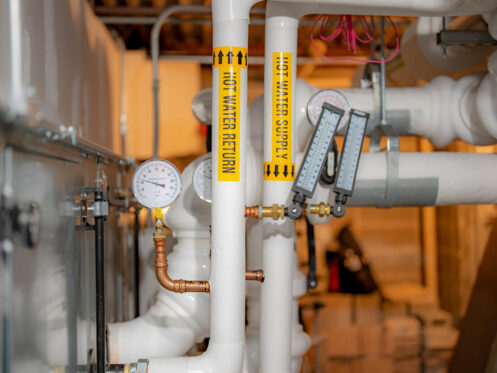
In Phoenix, water can be hard on more than just pipes. For hotels, it can quietly wear down guest comfort, housekeeping results, kitchen performance, and the life of expensive equipment. A property may look polished in the lobby and still lose points where it matters most: cloudy glassware, spotty fixtures, rough-feeling towels, soap that will not rinse clean, and water heaters working harder than they should.
That is why hotel water softening matters so much in this market. For hotels across the Valley, a well-designed water treatment plan is not a luxury add-on. It is part of protecting the building, supporting staff, and delivering the kind of stay guests remember for the right reasons.
Why Hotel Water in Phoenix Creates So Many Problems
Phoenix-area water is known for mineral content. Hard water carries dissolved calcium and magnesium that leave deposits behind as water moves through plumbing, heating equipment, fixtures, and appliances. In a home, that is frustrating. In hotels, it becomes a multiplying problem because the demand never really stops.
Think about how many times hotel water is used in a single day. Guests shower in the morning, housekeeping runs laundry and cleaning cycles, restaurants prep food and wash dishes, ice machines keep producing, and boilers or water heaters work around the clock. When hard water keeps moving through those water systems, scale buildup starts acting like plaque in an artery. Flow gets restricted, heat transfer drops, and maintenance calls become more frequent.
For most hotels, the issue shows up first in the little things. Shower doors get spotted. Faucet aerators clog. Soap seems weak. White residue appears on fixtures. Then the bigger issues follow: shortened equipment lifespan, rising energy consumption, and more emergency plumbing work than anyone wants on a busy property.
What a Water Softener Does for Hotels
A water softener removes hardness minerals before they can settle inside the property’s water systems. Most softeners use resin media inside a tank to exchange calcium and magnesium ions for sodium or potassium ions. The result is soft water that behaves better throughout the building.
That change has a ripple effect across the entire property. Soft water helps protect pipes, valves, heaters, dishwashing equipment, laundry equipment, and guest room fixtures. It also improves how soap, detergent, and cleaning products perform. Instead of fighting mineral-heavy water, staff can work with softened water that rinses cleaner and leaves fewer deposits behind.
In the hospitality industry, that matters because consistency matters. Guests may never ask what kind of commercial water softener a property uses, but they absolutely notice the results. They notice whether the shower feels clean, whether the coffee tastes off, whether the sheets feel stiff, and whether the room looks crisp or dull.
The Connection Between Soft Water and Guest Experience
Guest experience is built from a hundred tiny impressions. Water touches many of them.
A guest steps into a shower after a long travel day. If the water leaves their skin feeling filmy or their hair feeling dry, that impression sticks. If the showerhead has uneven spray because mineral deposits are narrowing the openings, that sticks too. Soft water supports better bathing, cleaner rinsing, and more reliable performance from showers and fixtures throughout each room.
The same goes for towels, linens, and robes. Hard water can make fabrics feel stiff and worn before their time. Softened water helps detergent rinse out more completely and can help extend textile life. That is good for guest comfort, but it also helps hotels save on replacement costs over time.
Hotels also rely on presentation. Glassware in restaurants, mirrors in bathrooms, and polished fixtures in guest rooms all look better with fewer mineral spots. When a property invests in water softening systems, it is not just protecting infrastructure. It is creating a cleaner, higher quality environment that supports guest satisfaction.
Where Hard Water Hits Hotel Operations the Hardest
Hotel operations depend on equipment that cannot afford to be slowed down by mineral scale. Water heaters, boilers, recirculation lines, laundry machines, dishwashers, steam equipment, and ice machines all perform better when a water softener is doing its job.
Hard water is especially rough on hot-side equipment because heat encourages minerals to drop out of the water and cling to surfaces. That layer of scale buildup acts like a winter coat wrapped around the heating element. The system has to work harder to do the same job. That means higher energy consumption, slower recovery, and more wear on the equipment.
In kitchens and restaurants, the problem spreads fast. Ice machines can develop mineral deposits that affect output and cleanliness. Dish machines can leave spots on glasses and flatware. Coffee and beverage equipment can collect scale internally. Cooking equipment that relies on clean water can also suffer when impurities and hardness are left untreated.
For hotels with banquet operations or multiple restaurants, a commercial water softener becomes even more essential. The more demand a property places on its water systems, the more important it is to determine the correct solution before scale starts eating into reliability.
Commercial Water Softener Options for Hotels
There is no one-size-fits-all commercial water softener for every property. A boutique inn with a small laundry load has different needs than a resort with hundreds of rooms, multiple restaurants, and high-volume conference traffic. The right system depends on flow demand, occupancy patterns, incoming water quality, and how the building is laid out.
A properly sized commercial water softener is usually selected based on hardness level, peak gallon demand, regeneration timing, and total capacity. In some cases, system sizing is discussed in cubic feet of resin, which helps determine how much softening work the unit can do before regeneration. That is not something hotels should guess at. If the unit is undersized, the property may run out of soft water during peak use. If it is oversized without a real plan, it can lead to inefficient regeneration and unnecessary operating expense.
Many hotels benefit from duplex or alternating softening systems. These setups allow one tank to stay online while the other regenerates, which helps maintain a continuous supply of softened water. For properties that cannot tolerate interruptions, that kind of redundancy is often the smarter long-term solution.
Water Treatment Beyond a Water Softener
A water softener addresses hardness, but full water treatment often requires a broader approach. Hotel water can contain chlorine, sediment, odors, bacteria risk, and other contaminants depending on the source and the building’s internal infrastructure. That is why many hotels need layered water treatment solutions, not just standalone softeners.
For example, carbon filtration may be used to reduce chlorine, improve taste, and cut down on odors. Sediment filtration helps protect valves and equipment from particulates that can wear down components. In some hospitality settings, reverse osmosis may be added at specific points of use for drinking water, beverage service, or specialty cooking applications.
Reverse osmosis is especially useful where high quality water is needed for restaurants, bars, coffee service, or premium guest amenities. It can help reduce harmful contaminants, dissolved solids, lead, and other impurities that affect taste and consistency. Some hotels also use reverse osmosis to reduce reliance on bottled water in select areas, which can support both guest expectations and sustainability goals.
The best water treatment solution is usually a combination of systems working together. Water softening handles mineral hardness. Filtration addresses contaminants. Reverse osmosis refines clean water where purity matters most. That layered strategy gives hotels a more complete answer to water quality concerns.
How Softening Systems Reduce Maintenance and Lower Maintenance Costs
When hotels talk about maintenance, they usually mean labor, downtime, parts, and disruption. Hard water drives all four.
Scale buildup in pipes and equipment narrows flow paths and creates pressure issues. Valves stop sealing correctly. Heating elements get coated. Sensors misread conditions. Appliances cycle longer. Staff spend more time descaling, flushing, replacing parts, and responding to complaints. It is death by a thousand mineral cuts.
Softening systems help lower maintenance costs because they reduce the stress placed on the property’s infrastructure. A commercial water softener can help extend the life of water heaters, dish machines, laundry equipment, steamers, and ice machines. It can also reduce the frequency of service calls tied to clogged fixtures, failing valves, and scale-related inefficiency.
That does not mean maintenance disappears. Every water softener, tank, valve, and control head still needs regular inspection and service. Resin condition, salt levels, regeneration settings, and water quality should all be checked on a schedule. But routine maintenance is far easier to budget for than emergency repairs during a sold-out weekend.
Benefits for Laundry, Kitchens, and Guest Rooms
The benefits of soft water show up differently in each part of a hotel, but they add up quickly.
In laundry, soft water helps detergent work more effectively. That can reduce detergent consumption, improve rinsing, and help linens feel softer and look brighter. Over time, it can help extend the life of sheets, towels, and uniforms. For hotels processing high volumes every day, that is a serious operational advantage.
In guest rooms, softened water helps showers rinse clean, keeps fixtures looking better, and reduces mineral spotting on glass and chrome. It can improve guest comfort in ways that are subtle but real. Guests may not say, “This property has excellent water treatment,” but they will absolutely notice when a room feels clean, polished, and comfortable.
In kitchens and restaurants, clean water supports better cooking, better beverage quality, and more reliable equipment performance. Ice machines produce clearer ice. Dish machines leave fewer spots. Beverage stations, prep sinks, and specialty equipment stay cleaner. For hotels with food service, that makes water treatment essential to both back-of-house efficiency and front-of-house presentation.
Signs a Hotel May Need Upgraded Water Softening Systems
Some warning signs are obvious. Others are easy to miss until the costs start stacking up.
If guests complain about dry skin, poor shower performance, or strange taste in tap water, that is worth investigating. If housekeeping struggles with spotting on fixtures and glass, that is another clue. If laundry requires extra detergent, or if linens feel rough despite proper washing, hard water may be part of the problem.
On the mechanical side, frequent scale removal, poor heater efficiency, recurring service on appliances, clogged aerators, and shortened equipment lifespan are all signs that the current water softener may be undersized, outdated, or not properly maintained. Hotels should also pay attention to changing occupancy patterns. A system that worked five years ago may not match today’s demand.
The first step is to determine actual water quality and usage conditions. Testing helps identify hardness, chlorine levels, sediment, and other contaminants. From there, a qualified plumbing and water treatment professional can recommend the right solution based on real conditions rather than guesswork.
Choosing the Right Water Treatment Solutions for a Phoenix Hotel
Phoenix is not a market where generic recommendations work well. Local water quality, heat, building age, and demand patterns all influence system performance. A hotel needs water treatment solutions designed around the property, not copied from a brochure.
That means looking at the whole picture: room count, laundry demand, restaurant and bar operations, incoming water quality, hot water usage, equipment inventory, and service access. It also means thinking beyond installation day. The right commercial water softener should be serviceable, scalable, and matched to the property’s real business needs.
Hotels should ask practical questions. How much gallon demand hits the system during peak hours? Is there enough capacity for full occupancy? Will the system support future growth? Are there areas where reverse osmosis makes sense? What maintenance schedule will keep performance consistent? These questions help determine whether a proposed system is actually built for hotel operations or simply intended to look good on paper.
Why Professional Installation Matters
Even the best water softener can underperform if the installation is sloppy. Poor bypass setup, bad drain routing, incorrect programming, undersized connections, and improper placement can all undermine results.
Professional installation matters because hotels are complex environments. The plumbing infrastructure may include recirculation systems, booster assemblies, multiple mechanical zones, and specialized equipment with different water quality requirements. A commercial water softener needs to be integrated into that environment carefully so the property gets reliable soft water without creating new bottlenecks.
Installation is also the right time to plan for serviceability. Valves should be accessible. Tanks should be placed with maintenance in mind. Filtration stages should be easy to inspect. If a hotel is investing in water treatment, the system should be built to support long-term efficiency, not just quick startup.
A Smarter Approach to Hotel Water Softening in Phoenix
In the hospitality industry, water is part of the product. Guests sleep in the room, but they experience the water all day long: in showers, sinks, ice, coffee, dining, and laundry. When hotel water is working against the property, everyone feels it, guests, staff, and ownership alike.
A well-designed water treatment plan can help hotels create a better guest experience, protect expensive equipment, reduce maintenance headaches, and lower maintenance costs over time. It can also support cleaner presentation, better efficiency, and more dependable hotel operations across the property.
For hotels in Phoenix, water softening is not just about comfort. It is about protecting the business from the steady grind of hard water and giving guests the kind of high quality water experience that feels effortless. And in hospitality, effortless is often what people remember most.
If your property is dealing with scale, inconsistent water quality, equipment wear, or rising service needs, it may be time to take a closer look at your current water systems. The right solution can help save money, extend system life, and create a cleaner, more reliable experience for both guests and staff.