
If you have ever filled a glass from the tap, taken a sip, and thought, Why does this taste a little off? You are already asking the right question. Homeowners hear the phrase water filtration system all the time, but many are still unsure what it actually means, what it does, and whether they need one in their own house.
At the simplest level, a water filtration system for home is equipment designed to improve your water by reducing unwanted contaminants, sediment, minerals, chemicals, odors, or bad taste before that water reaches your faucet, shower, appliances, or all of the above. Some systems treat only the water you drink at one sink. Others treat every drop entering the home.
That sounds straightforward, but the reality is more layered. Water treatment is not one-size-fits-all. A home in Phoenix dealing with hard water and chlorine-heavy municipal supply may need something very different from a home on a private well in another part of the country. The right system depends on what is in your water, what problems you are noticing, and what you want to fix.
As a licensed Arizona plumbing company, we provide maintenance, repairs, and installation of water softeners, whole‑house filtration, reverse osmosis drinking water, and water conditioning systems, backed by 20 years of experience.
A Home Water Filtration System, Explained Simply
Think of your home’s water supply like air moving through a house. If the air is dusty, smoky, or full of allergens, you would not just shrug and say, “Well, that is air.” You would filter it. Water works the same way. It may look clear, but that does not automatically mean it is clean, balanced, or pleasant to use.
A home water filtration system is built to remove or reduce specific impurities from your water. Depending on the system, that could include sediment, chlorine, volatile organic compounds, scale-causing minerals, certain heavy metals, and other dissolved contaminants. The goal is not just “better tasting water,” though that is often one of the first things people notice. The bigger picture is protecting your plumbing, improving water quality, and making daily life more comfortable.
Some homeowners install filtration because their tap water smells like a swimming pool. Others are tired of white crust building up on faucets. Others want cleaner drinking water without hauling bottled water home every week like they are stocking a bunker. Different reasons, same core idea: better water where you live.
How a Water Filtration System Works
Most filtration systems work by forcing water through some kind of treatment media. That media traps, absorbs, blocks, or changes the substances in the water. The exact process depends on the type of system.
For example, a carbon filter is commonly used to reduce chlorine, unpleasant taste, and odor. Water passes through activated carbon, which acts almost like a magnet for certain contaminants. A sediment filter catches dirt, rust, sand, and debris. A reverse osmosis system uses a semi-permeable membrane to remove a very wide range of dissolved solids and impurities. A water softener, while technically different from filtration, is often installed alongside filtration systems to address hardness minerals like calcium and magnesium.
That distinction matters. People often use “filtration system” as a catch-all phrase, but in real homes, the best setup is often a combination of systems. One part may filter chemicals. Another may soften hard water. Another may polish drinking water at the kitchen sink. Good water treatment is less like flipping a switch and more like building the right tool kit.
Common Types of Water Filtration Systems for Homes
There is no single “best” home water filtration system for every property. What works beautifully in one house may be the wrong fit in another. That is why understanding the main categories helps.
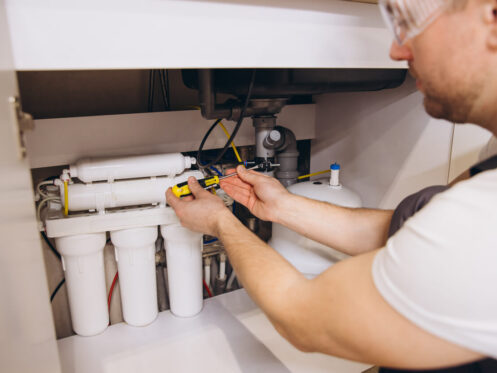
The most common option is a point-of-use system, which treats water at one specific location. A classic example is an under-sink reverse osmosis system installed at the kitchen faucet. This is a popular choice for homeowners who mainly want cleaner drinking and cooking water.
Another category is a whole-home water filtration system, sometimes called a point-of-entry system. This type is installed where water enters the house, so it treats water before it flows to showers, sinks, laundry, and appliances. If you want better water throughout the home, this is usually the direction to look.
Here are some of the most common systems homeowners consider:
- Sediment filters for dirt, rust, and debris
- Carbon filters for chlorine, taste, and odor
- Reverse osmosis systems for drinking water purification
- Water softeners for hard water minerals
- Conditioning systems for scale reduction
- UV purification systems for bacteria and microorganisms in certain water supplies
- Whole-home combination systems that blend filtration and softening
In many Arizona homes, especially around Phoenix and the North Valley, a layered system makes the most sense. Hard water is a constant nuisance here, and municipal water often carries a taste or smell homeowners want to reduce. That is why many local households pair a water softener with a whole-home filtration unit and sometimes a reverse osmosis drinking water system at the sink.
What Does a Home Water Filtration System Remove?
This is where homeowners often expect a simple answer, but the honest answer is: it depends on the system. Not all filters remove the same things, and not all water problems are caused by the same contaminants.
A basic carbon filter may reduce chlorine and improve taste, but it will not necessarily solve hard water. A reverse osmosis system can reduce many dissolved solids, but it is usually designed for drinking water at a specific tap, not for treating shower or laundry water. A whole-home sediment filter can catch debris, but it will not magically remove every chemical compound in the supply.
Depending on the design, a home water filtration system may reduce:
- Chlorine
- Sediment
- Rust particles
- Bad taste and odor
- Volatile organic compounds (VOCs)
- Certain heavy metals
- Scale-causing minerals when paired with softening treatment
- Total dissolved solids in reverse osmosis applications
This is why testing and diagnosis matter. If your main complaint is dry skin, spotty dishes, and scale buildup, the issue may be hard water more than drinking water contamination. If your complaint is taste and odor, carbon filtration may do a lot of the heavy lifting. If you want the cleanest possible water at the kitchen tap, reverse osmosis may be the right move.
Do You Need a Water Filtration System in Your Home?
Not every home needs the same level of treatment, but many homes can benefit from some form of filtration. The signs are often right in front of you. Water that smells odd. Tap water that tastes metallic, bitter, or heavily chlorinated. White scale on shower glass. Soap that refuses to lather. Appliances aging faster than they should. Skin that feels tight and itchy after a shower.
These are not just annoyances. They are clues. Your water is telling you a story, and it is usually not subtle about it.
In Phoenix, hard water is one of the biggest reasons homeowners start looking into treatment systems. Arizona water is famously mineral-heavy. That means your water heater, fixtures, dishwasher, washing machine, and plumbing pipes can all take a beating over time. Add chlorine taste and odor from municipal treatment, and suddenly a water filtration system stops sounding like a luxury and starts sounding like basic home protection.
A lot of homeowners wait until they are fed up. They replace a faucet. Then a shower valve. Then a water heater. Then they realize their water has been quietly roughing up the whole house for years. Installing the right filtration and treatment system can help break that cycle.
Whole-Home Filtration vs. Reverse Osmosis: What Is the Difference?
This is one of the most common points of confusion. Homeowners often ask whether they need whole-home water filtration or reverse osmosis, as if they are competing products. In many cases, they are not competitors at all. They do different jobs.
A whole-home water filtration system treats the water entering your house. That means the water at your showers, sinks, laundry, and appliances gets treated before use. This is ideal if your goals include reducing chlorine, improving general water quality, protecting pipes and fixtures, and improving bathing water.
A reverse osmosis system is usually installed at a single drinking water location, most often the kitchen sink. It is designed to produce highly purified water for drinking and cooking. If whole-home filtration is like improving the water for your entire property, reverse osmosis is like putting a final polishing lens on the water you actually consume.
Many homes benefit from both. For example, a homeowner in Phoenix might install a whole-home filtration and softening system to reduce chlorine and hard water damage, then add a reverse osmosis unit under the kitchen sink for cleaner, better-tasting drinking water. That setup covers both comfort and consumption.
Benefits of Installing a Water Filtration System for Home
The benefits go beyond taste. Better water changes the daily feel of a home in ways people often do not expect until after the system is installed.
For one, filtered water can make drinking from the tap far more appealing. That may sound small, but it matters. If your water tastes clean, you are less likely to spend money on bottled water or clutter your garage with plastic cases. Cooking can improve too, because soups, coffee, tea, pasta, and even ice all start with water.
Then there is the plumbing side. In areas with hard water, treatment can help reduce scale buildup inside pipes, fixtures, and appliances. That can improve efficiency and potentially extend the life of water heaters, dishwashers, and washing machines. Shower doors may stay cleaner. Soap may rinse more easily. Towels may feel less stiff. Hair and skin may feel less dried out.
In other words, better water is one of those upgrades that touches almost everything without drawing attention to itself. It is not flashy like a kitchen remodel, but you notice it every day.
What to Consider Before Choosing a System
Before buying a system, it is smart to step back and ask a few grounded questions. What problem are you trying to solve? Drinking water taste? Hard water? Scale? Chlorine odor? Appliance protection? All of the above?
That matters because choosing a water filtration system without understanding the water issue is a bit like buying medicine based on the color of the bottle. You might get lucky. You also might spend money on the wrong fix.
A professional assessment can help identify what is actually happening in your water and what type of system makes sense for your home, plumbing layout, and goals. You also want to think about ongoing maintenance. Filters need replacement. Reverse osmosis systems need service. Water softeners need salt and periodic attention. A good system should not just be effective on day one. It should be practical to maintain long term.
For Phoenix-area homeowners, local water conditions should absolutely shape the conversation. Hard water is not some abstract possibility here. It is part of living in the Valley. A system that works well in another region may not fully address the mineral content and water quality concerns common in Arizona homes.
So, What Is a Water Filtration System for Home?
It is a way to take control of the water you use every day. At its core, a water filtration system for home is designed to remove or reduce unwanted substances in your water so your home’s supply is cleaner, safer, better tasting, and easier on your plumbing.
But in practice, it is more than a definition. It is the difference between tolerating your water and actually being comfortable with it. It is fewer spots on fixtures, fewer complaints about taste, less scale in your plumbing, and more confidence in what is coming out of the tap.
If your water has been leaving clues all over your house, it may be time to stop guessing and start with a real solution. For homeowners in Phoenix and the North Valley, that often means looking at filtration, softening, reverse osmosis, or a smart combination of all three.
If you are exploring water treatment options and want honest guidance on what fits your home, Wyman Plumbing & Mechanical can help you sort through the noise and find the right setup for your water, your plumbing, and your budget.